

There’s a phrase that gets used a lot in change management: “people resist change.” It’s repeated in boardrooms, written into project risk registers, and used to explain why well-intentioned initiatives stall or fail. But it’s not quite right. And that small inaccuracy carries big consequences for how managers approach transformation.
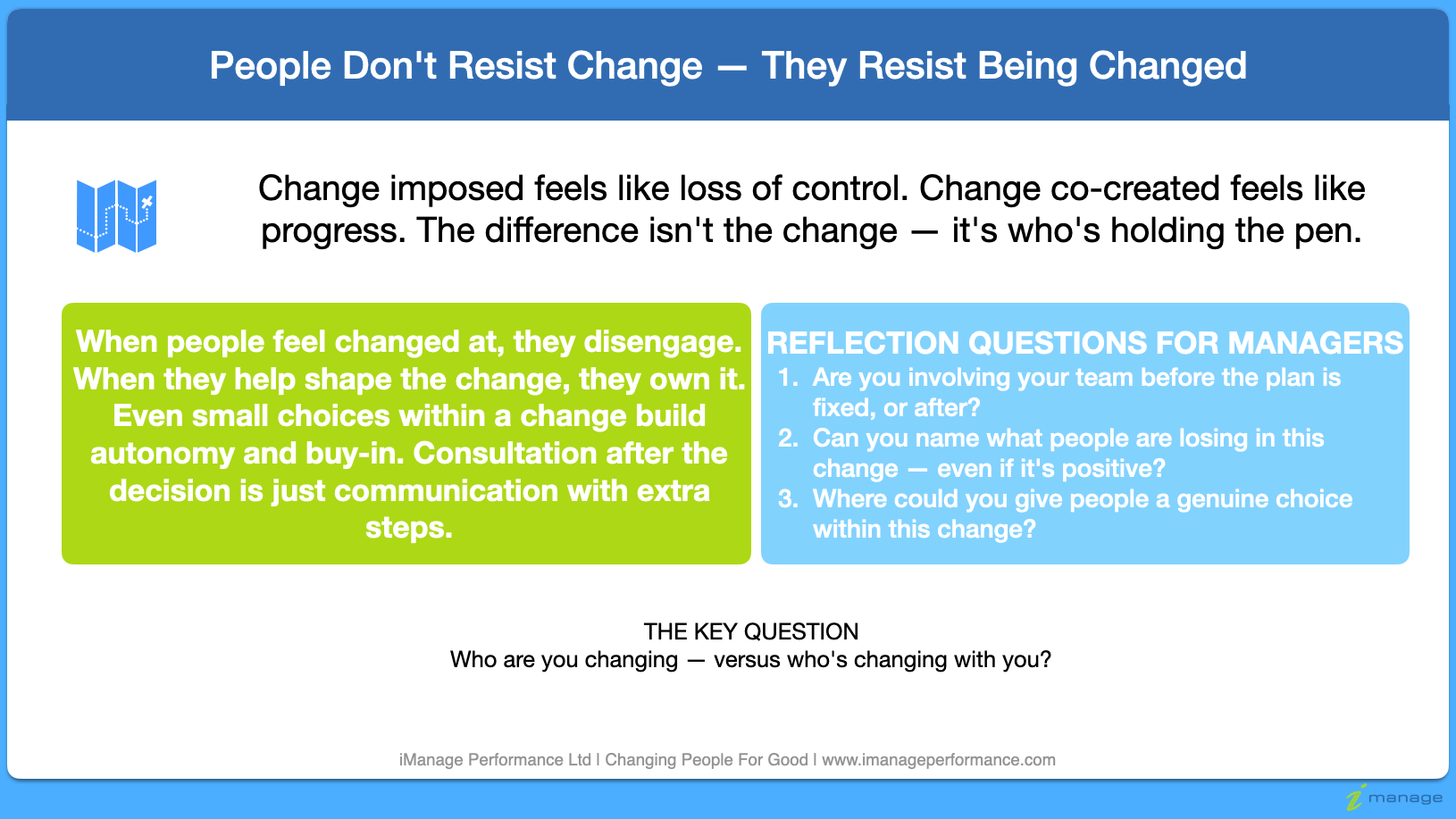
The more accurate truth is this: people don’t resist change — they resist being changed.
Think about it. People choose to change jobs, move house, take up new hobbies, and reinvent themselves all the time. Change itself isn’t the problem. What triggers resistance is the feeling that change is happening to them rather than with them. That they’re the object of someone else’s plan, rather than a participant in shaping it.
The Difference Between Imposed and Co-Created
When change is imposed — even well-designed, well-intentioned change — it activates a threat response. People feel a loss of control, a loss of identity, sometimes a loss of competence. The brain registers it as a kind of bereavement. And when people feel they’re losing something, they protect what they have.
When change is co-created, something different happens. People become invested in the outcome because they helped shape it. Their ideas are visible in the solution. Their concerns were heard. The change reflects their reality, not just a strategy document written three floors above them.
The difference isn’t the change itself. It’s who’s holding the pen.
Practical Steps for Managers
So what does this look like in practice? Here are five things you can do differently the next time you’re leading or managing change.
1. Involve people before the decision is made, not after. Consultation that happens once the plan is fixed isn’t really consultation — it’s communication with extra steps. If you want genuine buy-in, bring people into the room while options are still open. Ask what’s working that you shouldn’t break. Ask what frustrations the change might solve. You’ll get better ideas, and you’ll build ownership at the same time.
2. Make the ‘why’ personal, not just organisational. “The business needs to be more efficient” doesn’t move people. “Here’s how this change will make your day-to-day easier” does. When communicating change, translate the strategic rationale into the lived experience of the people it affects. What will they be able to do that they can’t do now? What will get better for them?
3. Give people a genuine choice — even if it’s small. Autonomy is one of the most powerful motivators at work. Even when the decision has been made, ask: what can people choose for themselves within this? The timing of a transition, the way they set up a new process, who they work with during the change. Small choices matter. They signal that you see people as agents, not just recipients.
4. Create space for honest reactions. Resistance often goes underground because there’s no safe outlet for it. If people can’t voice their concerns openly, those concerns don’t disappear — they reappear as disengagement, passive non-compliance, or quiet exits. Build regular checkpoints where people can tell you what’s working and what isn’t. And when they do, respond with curiosity rather than defensiveness.
5. Acknowledge the loss — even when the change is good. Even positive change involves leaving something behind. A familiar way of working. A team structure people valued. A role that gave someone their sense of identity. Good change managers don’t gloss over this. They name it. Acknowledging that something is being lost doesn’t undermine the case for change — it builds the trust that makes change possible.
The Question Worth Asking
Here’s a useful diagnostic for any change initiative you’re currently leading or about to launch: Who are you changing — and who’s changing with you?
If you’re honest about that question, the answer will tell you a lot about the kind of resistance you’re likely to encounter — and what you need to do differently.
Change doesn’t have to feel like something that happens to people. With the right approach, it can feel like something they’re part of. That shift — from being changed to changing together — is often the difference between transformation that sticks and transformation that stalls.